Address:
K-30 B, Basement, Kalkaji, New Delhi – 110019

Phones:
011-796-37823, +91 971-806-3158
Today's Appointments: 0
Address:
K-30 B, Basement, Kalkaji, New Delhi – 110019
Phones:
011-796-37823, +91 971-806-3158
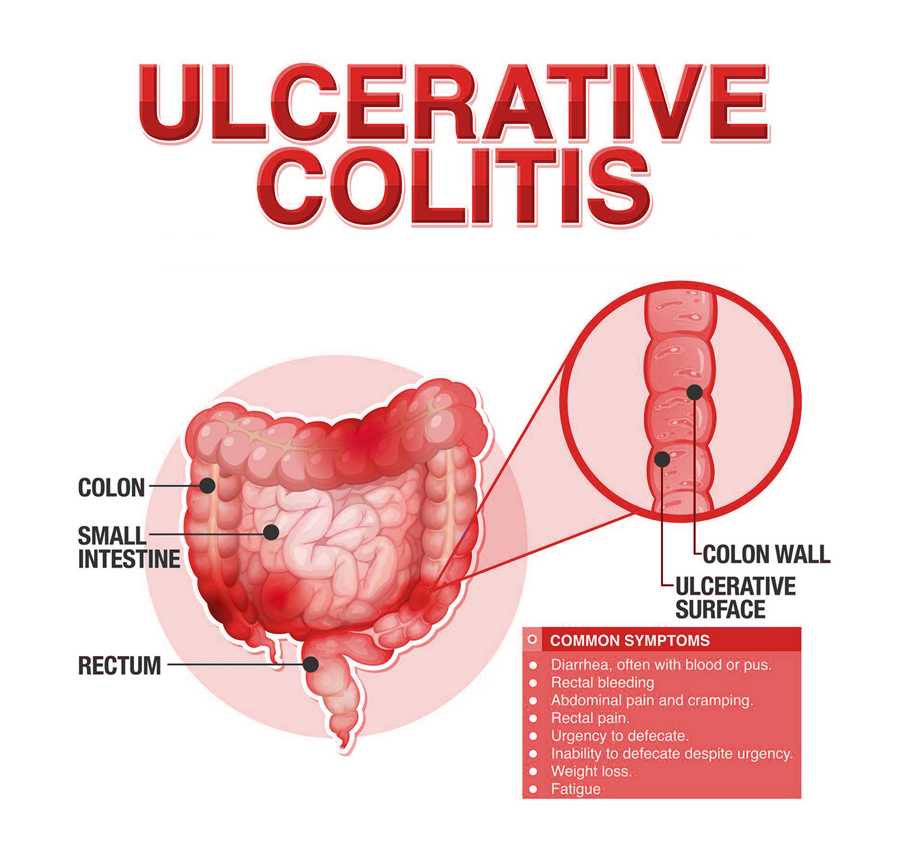
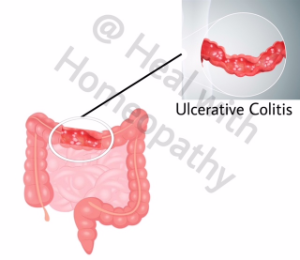
Ulcerative colitis is a chronic inflammatory bowel disease that pursues a protracted relapsing and remitting course, usually extending over years. Ulcerative colitis involves the colon. The incidence of inflammatory bowel disease (IBD) varies widely between populations. There was a dramatic increase in the incidence of ulcerative colitis in the western world, starting in the second half of the last century and coinciding with the introduction of a more ‘hygienic’ environment with the advent of domestic refrigeration and the widespread use of antibiotics. The developing world has seen similar patterns, as these countries adopt an increasingly Westernised lifestyle. In the West, the incidence of ulcerative colitis is stable at 10–20 per 100 000, with a prevalence of 100–200 per 100 000. This commonly starts in the second and third decades of life, with a second smaller incidence peak in the seventh decade. Life expectancy in patients with IBD is similar to that of the general population. Although many patients require surgery and admission to hospital for other reasons, with substantial associated morbidity, the majority have an excellent work record and pursue a normal life.1
Clinical features
Diagnosis
The most important issue is to distinguish the first attack of acute colitis from infection. A history of foreign travel, antibiotic exposure (Clostridium difficile/pseudomembranous colitis) or homosexual contact increases the possibility of infection, which should be excluded by the appropriate investigations.1
Complications
This occurs in ulcerative colitis. In the most extreme cases, the colon dilates (toxic mega colon) and bacterial toxins pass freely across the diseased mucosa into the portal and then systemic circulation. This complication arises most commonly during the first attack of colitis and is recognised by the features. An abdominal X-ray is recommended to be taken daily in such cases because, when the transverse colon is dilated to more than 6 cm, there is a high risk of colonicperforation, although this complication can also occur in the absence of toxic mega colon. Severe colonic inflammation with toxic dilatation is a surgical emergency and most often requires colectomy.1
Haemorrhage due to erosion of a major artery is rare.1
The risk of dysplasia and cancer increases with the duration and extent of uncontrolled colonic inflammation. Thus patients who have long-standing, extensive colitis are at highest risk. The cumulative risk for dysplasia in ulcerative colitis may be as high as 20% after 30 years. The risk is particularly high in patients who have concomitant primary sclerosing cholangitis for unknown reasons. Tumours develop in areas of dysplasia and may be multiple. Patients with long-standing colitis are therefore entered into surveillance programmes beginning 10 years after diagnosis. Targeted biopsies of areas that show abnormalities on staining with indigo carmine or methylene blue increase the chance of detecting dysplasia and this technique (termed pan colonic chromo-endoscopy) has replaced colonoscopy with random biopsies taken every 10 cmin screening for malignancy. The procedure allows patients to be stratified into high, medium or low-risk groups to determine the interval between surveillance procedures. Family history of colon cancer is also an important factor to consider. If high-grade dysplasia is found, panproctocolectomy is usually recommended because of the high risk of colon cancer.1
Extra-intestinal complications
Extra-intestinal complications are common in IBD and may dominate the clinical picture. Some of these occur during relapse of intestinal disease; others appear to be unrelated to intestinal disease activity.1
Investigations
At initial presentation, stool microscopy, culture and examination for Clostridium difficile toxin or for ova and cysts, blood cultures and serological tests should be performed. These investigations should be repeated in established disease to exclude super imposed enteric infection in patients who present with exacerbations of IBD. During acute flares necessitating hospital admission, three separate stool samples should be sent for bacteriology to maximise sensitivity.1
Patients who present with diarrhoea plus raised inflammatory markers or alarm features, such as weight loss, rectal bleeding and anaemia, should undergo ileocolonoscopy. Flexible sigmoidoscopy is occasionally performed to make a diagnosis, especially during acute severe presentations when ileocolonoscopy may confer an unacceptable risk; ileocolonoscopy should still be performed at a later date, however, in order to evaluate disease extent. In ulcerative colitis, there is loss of vascular pattern, granularity, friability and contact bleeding, with or without ulceration. In established disease, colonoscopy may show active inflammation with pseudopolyps or a complicating carcinoma. Biopsies should be taken from each anatomical segment (terminal ileum, right colon, transverse colon, left colon and rectum) to confirm the diagnosis and define disease extent, and also to seek dysplasia in patients with long-standing colitis guided by pancolonic chromoendoscopy.1
Barium enema is a less sensitive investigation than colonoscopy in patients with colitis and, where colonoscopy is incomplete, a CT colon gram is preferred.1
Management
Ulcerative colitis is a life-long condition and has important psychosocial implications; specialist nurses, counsellors and patient support groups have key roles in education, reassurance and coping.1
The key aims of medical therapy are to: 1
Some complications
Patients who fail to respond to maximal oral therapy and those who present with acute severe colitis are best managed in hospital and should be monitored jointly by a physician and surgeon:
Indications for surgery in ulcerative colitis1
Impaired quality of life
Scope of Homeopathy
Homoeopathy has well recognized role to play in treating and managing Ulcerative colitis.
UC progression can be arrested to a great extent by constitutional or totality based homeopathic medicine. For acute episodes of pain there are many acute remedies which can be used for control of pain and inflammation. Regular use of constitutional remedy brings the ESR, CRP and other parameter down. Right medicine can lead a patient to lead a pain free and normal life.
It’s advisable to consult a registered homeopathic practitioner and take advice for a right homeopathic remedy.
Homeopathic Medicines for Ulcerative Colitis2
Arsenicum Album
Gnawing, burning pains like coals of fire; relieved by heat. Liver and spleen enlarged and painful. Ascites and anasarca. Abdomen swollen and painful. Pain as from a wound in abdomen on coughing.
Rectum – Painful, spasmodic protrusion of rectum. Tenesmus. Burning pain and pressure in rectum and anus.
Carbo Vegetabilis
Abdomen Pain as from lifting a weight excessive discharge of fetid flatus. Cannot bear tight clothing around waist and abdomen. Ailments accompanying intestinal fistulae. Abdomen greatly distended; better, passing wind. Flatulent colic. Pain in liver.
Rectum and Stool – Flatus hot, moist, offensive. Itching, gnawing and burning in rectum. Acrid, corrosive moisture from rectum. Burning at anus, burning varices .Frequent, involuntary offensive stools, followed by burning. White haemorrhoids; excoriation of anus. Bluish, burning piles, pain after stool.
Cutting pain in abdomen, soon after eating. Chronic intestinal ulceration. Soreness in right hypochondrium, fatty infiltration of liver and increase in soft fibrous tissue. Painful retraction, soreness and burning.
Kalium Carbonicum
Stitches in region of liver. Old chronic liver troubles, with soreness. Jaundice and dropsy. Distention and coldness of abdomen. Pain from left hypochondrium through abdomen; must turn on right side before he can rise.
Rectum – Large, difficult stools, with stitching pain an hour before.
Bruised sensation; cecal region and transverse colon painful. Bloated; very painful to least touch.
Mercurius Solubilis
Stabbing pain, with chilliness. Boring pain in right groin. Flatulent distention, with pain.
Nitricum Acidum
Great straining, but little passes, Rectum feels torn. Bowels constipated, with fissures in rectum. Tearing pains during stools. Violent cutting pains after stools, lasting for hours (Ratanh). Diarrhoea, slimy and offensive. After stools, irritable and exhausted. Colic relieved from tightening clothes.
Phosphorus
Feels cold (Caps). Sharp, cutting pains. A very weak, empty, gone sensation felt in whole abdominal cavity. Pancreatic disease. Large, yellow spots on abdomen.
Pulsatilla Pratensis
Painful, distended; loud rumbling. Pressure as from a stone. Colic, with chilliness in evening.
Diet recommendation for Ulcerative Colitis
Food to be taken
Food to be avoided
References