

Address:
K-30 B, Basement, Kalkaji, New Delhi – 110019

Phones:
011-796-37823, +91 971-806-3158
Today's Appointments: 0
Address:
K-30 B, Basement, Kalkaji, New Delhi – 110019
Phones:
011-796-37823, +91 971-806-3158
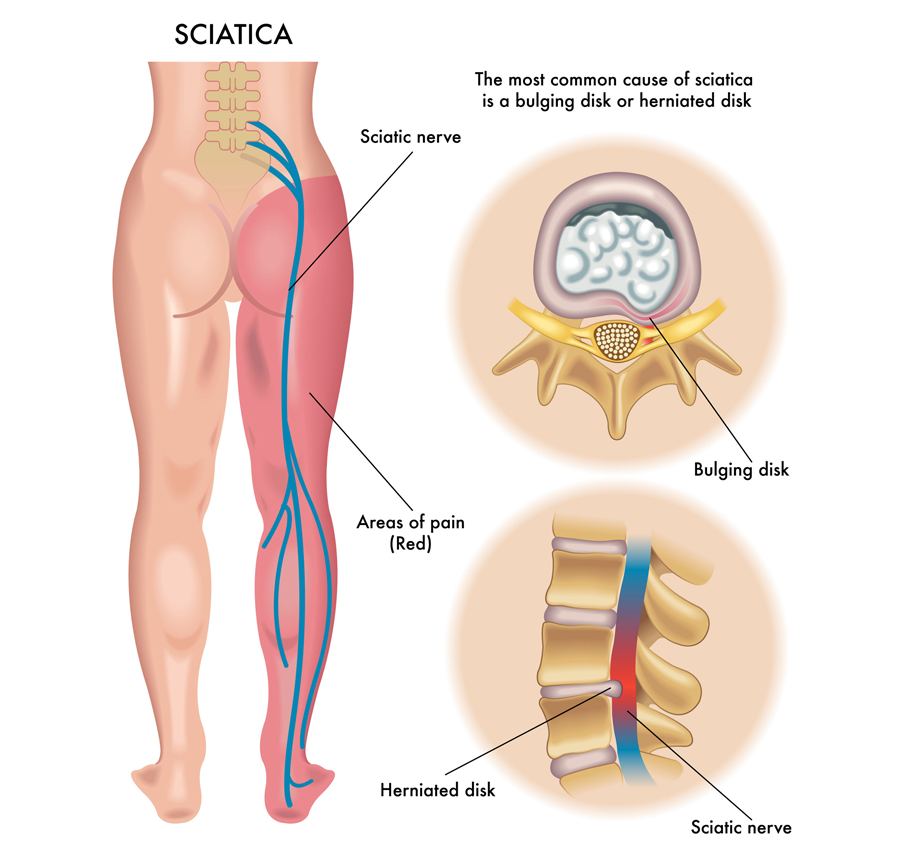
Sciatic nerve is the largest nerve in the body which originates from the sacral plexus, formed by the roots (anterior rami) of spinal nerves L4–L5 and S1–S4. Sciatica is a type of Lumbar Radicular Pain (LRP)1 and is the most common form of back pain, caused by compression or irritation of the sciatic nerve. The typical presentation of sciatica is a pain that extends from the buttock down the posterior and lateral aspect of the leg and the lateral aspect of the foot.
Sciatica is a symptom of a varied range of nociceptive spinal conditions.The injury to sciatic nerve may result from a herniated (slipped) disc, dislocated hip, osteoarthritis of the lumbosacral spine, pathological shortening of the lateral rotator muscles of the thigh (especially piriformis), pressure from the uterus during pregnancy, inflammation, irritation, or an improperly administeredmuscular injection. In addition, sitting on a wallet or other object for a long period of time can compress the nerve and induce pain.2
For accurate diagnosis of sciatica proper history taking and physical examination are required as nerve roots from L1 to L4 may also be involved in the same process resembling sciatica. Most of the times patients, use the term sciatica to describe any pain arising from the lower back and radiating down to the leg which can actually bea referred pain from the lower back and occurs without any association to disk herniation or nerve-root compression. It is a crucial point for clinicians to differentiate the radicular pain from the referred pain because the epidemiology, clinical course and, most importantly, therapeutic interventions totally vary for sciatica and other similar type of conditions.3
Physical examination:
To assess the sciatic compromise due to lumbosacral nerve root irritation clinicians perform the following tests:
The prognosis for acute lumbar radicular pain due to disk herniation is generally favourable, with most patients showing substantial improvement, spontaneously over months. However, various treatment options to provide symptomatic relief are available while the natural healing process unfolds. Studies show that bed rest is ineffective for treating sciatica hence revival of normal activity is recommended.
The conventional mode of treatment of sciatica due to disk herniation includes muscle relaxants, analgesics, corticosteroids, antidepressants and antiepileptics.,7
A recent study throws light on the role of vitamin D3 in treatment of lumbar disk hernia, where references supporting identification of vitamin D receptors in spinal cords, nerve roots, dorsal root ganglia and glial cells have been shared. This paper also projects the association of genetic polymorphism of vitamin D3 and the development of lumbar disc herniation and degeneration and projects the usefulness of vitamin D3 in reducing the severity of discogenic pain (such as sciatica).7
It should emphasize the self-limiting nature of the condition andthe fact that exercise is helpful rather than damaging. Regular pain relieving medicines may be required to improve mobility and facilitates exercise. Return to work and normal activity should take place as soon as possible. Bed rest is not helpful and may increase the risk of chronic disability. Referral for physical therapy should is considered if a return to normal activities has not been achieved by 6 weeks. Other treatment modalities should be considered based on cause of the condition.
Homeopathic medicines are available which help relieve muscular spasm and also pain due to nerve irritation. Medicine selection is done by a homeopath based on symptoms and pathology. Physiotherapy and posture correction have an important role to play in management of sciatica.
1. Arnica montana
Ailments from injury. Sore and lame back.
2. Bryonia
Painful stiffness in nape of neck. Stitches and stiffness in small of back. From hard water and sudden changes of weather.
3. Cimicifuga racemosa
Lancing pains in left hip. Pains become as acute as to drive patient pout of bed; better sitting, relieved by pressure.
4. Colocynth
Sharp, spasmodic attacks of pain shoot down the sciatic nerve to the feet; crampy pains as if the parts were screwed in a vise; it is worse on the right side and at night, and tends to be paroxysmal; relieved by warmth and rest; aggravated by motion. The nerves around the hip joint and acetabulum suffer most severely.
Coldness in back and spine. Bruised pain in small of back and thighs; nightly digging in right lower limb to toes. Eruption on upper inner thighs. Stiff, contracted joints, heaviness of lower limbs. Stiffness in back.
6. Hypericum Perforatum
Pressure over sacrum. Spinal concussion. Coccyx injury from fall, with pain radiating up spine and down limbs. Jerking and twitching of muscles.
7. Kalmia latifolia
Deltoid rheumatism especially right. Pains from hips to knees and feet. Pains affect a large part of a limb, or several joints, and pass through quickly. Weakness, numbness, pricking, and sense of coldness in limbs.
8. Ledum Palustre
Rheumatism mainly of lower limbs. Pain travelling upwards. Affection of left shoulder and right hip.
9. Ranunculus bulbosus
Rheumatic pains with stiffness aggravated cold and wet weather. Change of weather or temperature, touch, motion and coldness
10. Rhus Toxicodendron
In chronic cases, pain brought on/ aggravated by exposure to wet; straining and lifting pains worse at rest, relieved by motion, heat and rubbing.
11. Ruta Graveolens
12. Tellurium metallicum
Pain in sacrum. –Pain from last cervical to fifth dorsal vertebra, very sensitive; worse touch (Chin s; Phosph) Sciatica; worse right side, coughing, straining, and at night, with sensitive vertebral column. Contraction of tendons in bends of knees.
